Plant and Animal Sequencing
Sequencing Crops and Livestock
As sequencing costs continue to decline, plant and animal sequencing is becoming a more common approach in agricultural research. Next-generation sequencing (NGS) is especially useful in this field, where plant and animal genomes can be complex and prior knowledge scarce. Sequencing species of interest provides detailed information about genetic variation and how these factors influence traits.
Empowering Plant and Animal Sequencing Across the Globe
“This is the most exciting time to be in genomics,” says Charlie Johnson from Texas A&M University. He, along with Chris Austin and Larry Croft from Deakin University in Australia and Ryo Koyanagi from the Okinawa Institute of Science and Technology (OIST) in Japan, discuss how the NovaSeq System is making large-scale plant and animal sequencing projects possible.
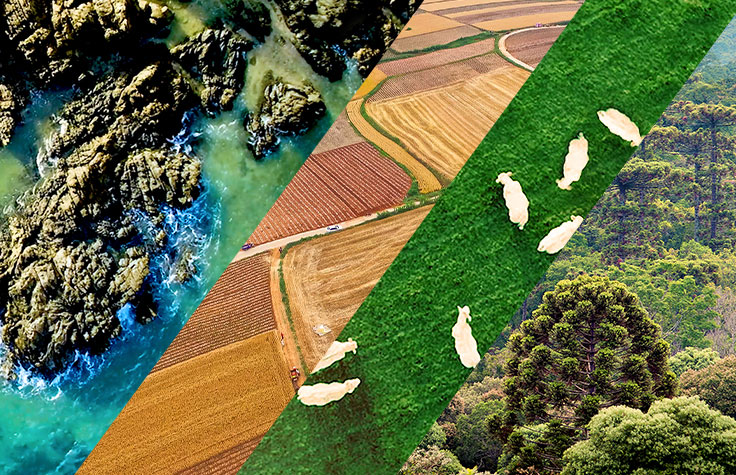
Plant and Animal Sequencing Methods
De Novo Plant and Animal Sequencing
Whether a research project is focused on a novel species or one that has never been investigated before using genetic tools, de novo sequencing is a first step toward understanding the genetic underpinnings of a plant or animal’s functions and its interaction with the environment. Researchers can use a newly assembled genome to assign map positions and stack diverse breed information for subsequent resequencing to discover single nucleotide polymorphisms (SNPs) and other genetic variations.
Learn MoreWhole-Genome Resequencing
When a species’ reference genome is available, whole-genome animal and plant sequencing is an efficient approach for discovering genes, SNPs, and structural variants, while simultaneously determining genotypes. Information from these studies will fill in the gaps that exist in the genetic maps of many plant and animal species, improving plant breeding and selection, and enabling definitive comparative genomic analyses within and across species.
Learn MorePlant and Animal Transcriptome Sequencing
RNA sequencing is revolutionizing the exploration of gene expression in plants and animals, providing novel insights into changing expression levels that occur in development and during disease and stress conditions. It can be used to elucidate gene and protein function and interactions, identify tissue-specific list of RNA transcripts produced by an animal or plant genome (mRNAs, non-coding RNAs, and small RNAs), and discover new SNPs.
Learn MoreAnimal and Plant Epigenetics
Adaptive responses to changes in the environment (such as food availability or drought conditions) can trigger phenotypic changes in plants and animals that affect their viability and reproductive fitness. By using sequencing to identify changes in DNA methylation, chromatin structure, and small RNA expression, researchers can better understand how epigenetic factors contribute to controlling these and other traits in a species of interest.
Learn MoreTargeted Resequencing
Targeted resequencing digs deeper into the exome or specific genomic regions of interest identified from large-scale association or linkage studies. This efficient and economical method sequences predetermined areas of genetic variation over many samples, identifying common and rare variants such as SNPs and copy number variants (CNVs).
These variants may represent beneficial mutations that can help inform breeding decisions and may reveal causative mutations responsible for plant or animal disease, or parasite susceptibility.
Learn MoreGenotyping by Sequencing
Genotyping by sequencing provides a low-cost genetic screening method to discover novel plant and animal SNPs and perform genotyping studies, often simultaneously in many specimens. By using animal and plant sequencing for routine screening, researchers can accelerate the return on investment in breeding practice.
Applications of this method include genetic mapping, screening backcross lines, purity testing, constructing haplotype maps, and performing association and genomic evaluation for plant genome studies.
Learn MoreSoil and Agricultural Metagenomics
Sequencing has transformed environmental metagenomics, enabling the study of large microbial communities directly in their natural environment without prior culturing. These studies can yield important information about diverse microbial populations associated with animal and plant development, from rumen flora that enhance animal digestion to root-associated bacteria involved in nitrogen fixation.
Genome Editing
CRISPR (Clustered Regularly Interspaced Short Palindromic Repeats) genome editing holds great potential for agriculture, food science, environmental science, and a broad range of other applications. NGS may be utilized at various stages of an editing workflow, from confirming gene knockouts to analyzing on- and off-target effects and assessing the the functional impact of gene edits.
Learn MoreThe Value of Genomics in Agriculture
Improved Breeding Plans for Beef Cattle
Sébastian Clairand, manager of the meat sector at Evolution and director of selection company Charolais Univers, and Antoine Chedru, a fourth-generation cattle breeder, discuss how genomic selection has increased gains in beef cattle through improved breeding plans, the ability to select for specific genes, and a quicker, better understanding of a bull’s genetic value.
How Genomic Testing Improves Dairy Cattle Herds
General manager of the Canadian Dairy Network Brian Van Doormaal discusses how genomic testing can better define the value of milking cows and improve dairy herds. Brian Anderson, a fifth-generation dairy farmer, shares his own experience with genotyping cows, including doubled production, longer-lasting cows, and the significant benefits genotyping can offer in the future.
Featured Animal and Plant Sequencing Research
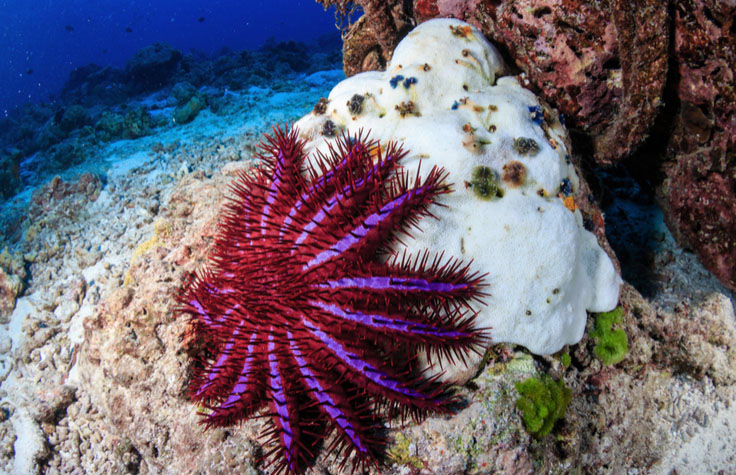
Exploring the Unknown: NGS Supports Species Research
Researchers use Illumina sequencing to identify, characterize, and catalog the diversity of species, on land and in the sea.
Read More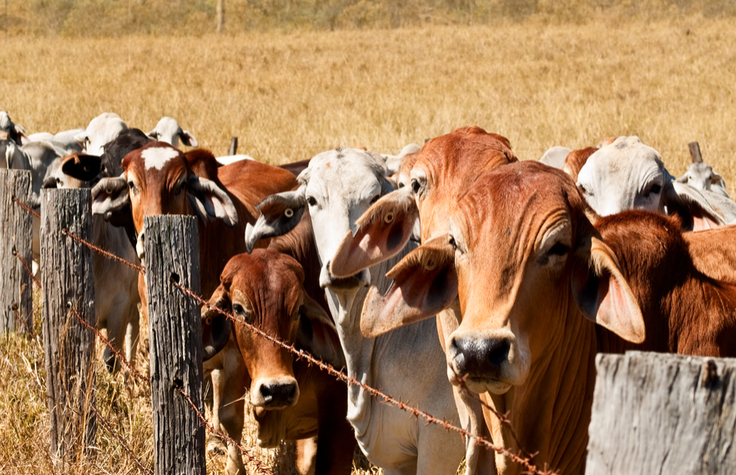
Large-Scale Bull Genome Sequencing Enables Rapid Livestock Improvement
Sequencing data from the 1000 Bull Genomes Project is aiding discoveries of positive and negative traits, benefiting herds globally.
Read More
Earth BioGenome Project Builds Foundation to Sequence Life
The project aims to create a digital backbone of sequences from the tree of life that will serve as critical infrastructure for biology, conservation, agriculture, medicine, and the growing global bioeconomy.
Read MoreEnvironmental DNA Sequencing
Environmental DNA sequencing is a rapidly emerging method for studying biodiversity without disrupting ecosystems. Modern sequencing approaches allow characterization of both bacterial and eukaryotic species in aquatic, soil, and other samples.
Learn More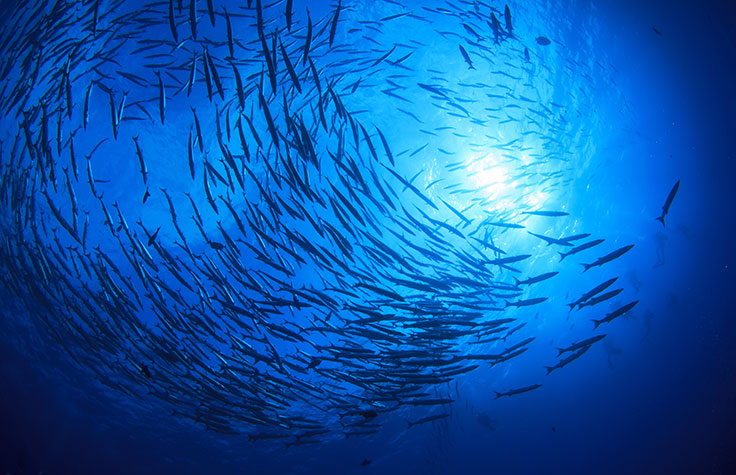
Plant Sequencing Sheds Light on Traditional Medicine
We traveled to Beijing, China, to interview Dr. Chang Liu, the Deputy Director of the Center for Bioinformatics at the Institute of Medicinal Plant Development (IMPLAD) Chinese Academy of Medical Sciences. Dr. Chang is applying genomic technologies to study the herbs used in Chinese traditional medicine.

Beginner's Guide to Next-Generation Sequencing
Considering bringing next-generation sequencing to your lab, but unsure where to start? These resources cover key topics in NGS and are designed to help you plan your first experiment.
Get Started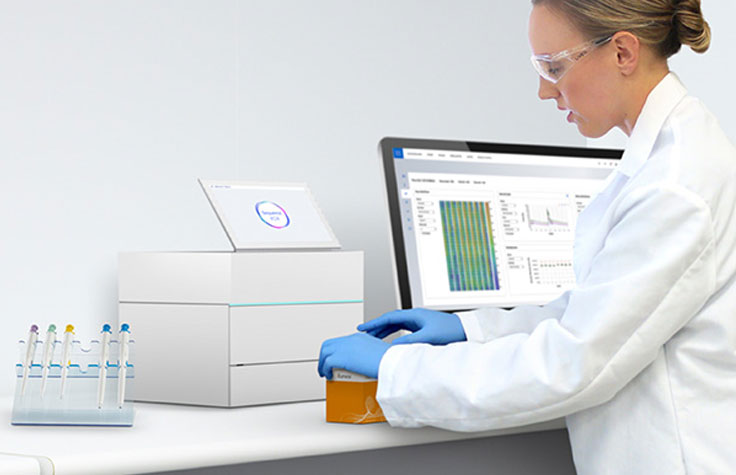
Featured Products
TruSeq Genotype Ne Kit
A low-cost, targeted solution for genotyping by sequencing of any nonhuman animal or plant species.
View Product
NovaSeq System
Scalable throughput and flexibility for virtually any sequencing method, genome, and scale of project.
View Product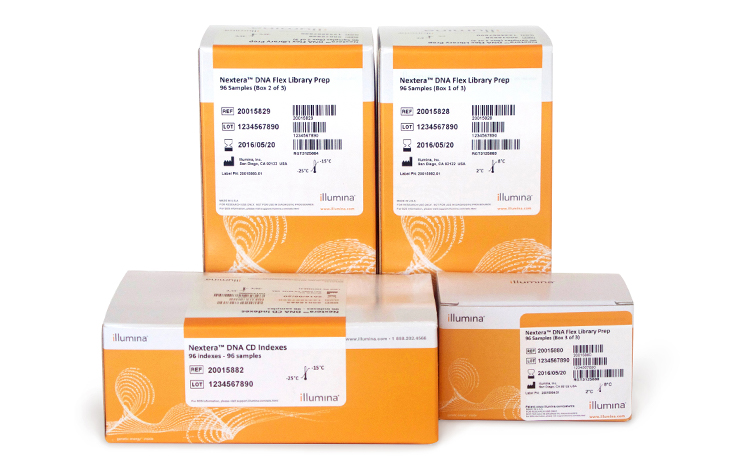
Nextera DNA Flex Library Prep Kit
A fast, integrated workflow for a wide range of applications, from human whole-genome sequencing to amplicons, plasmids, and microbial species.
View ProductInterested in receiving newsletters, case studies, and information on agrigenomics? Enter your email address.
Additional Resources
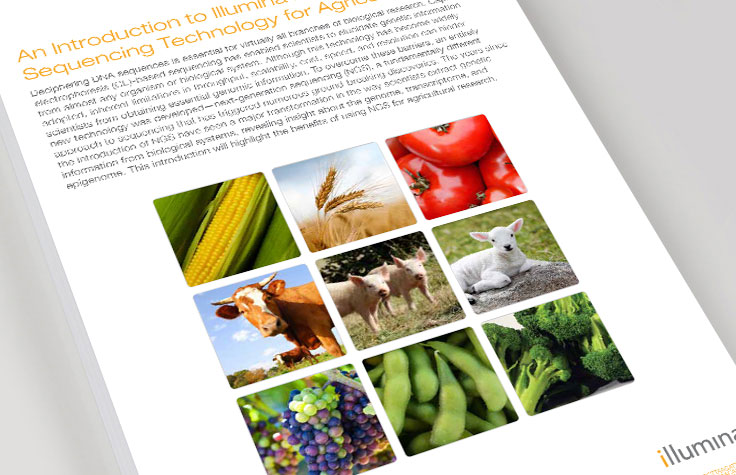
Introduction to NGS for Agriculture
An introduction to Illumina next-generation sequencing technology for agricultural research.
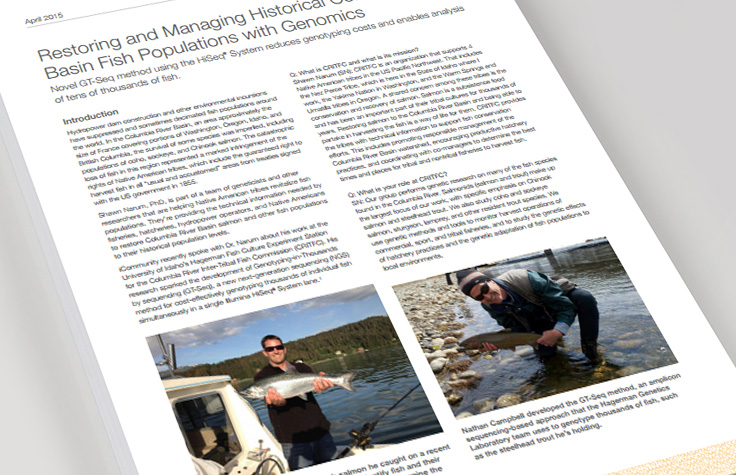
Fish Genotyping with NGS
A novel sequencing method reduces cost and enables analysis of tens of thousands of fish.
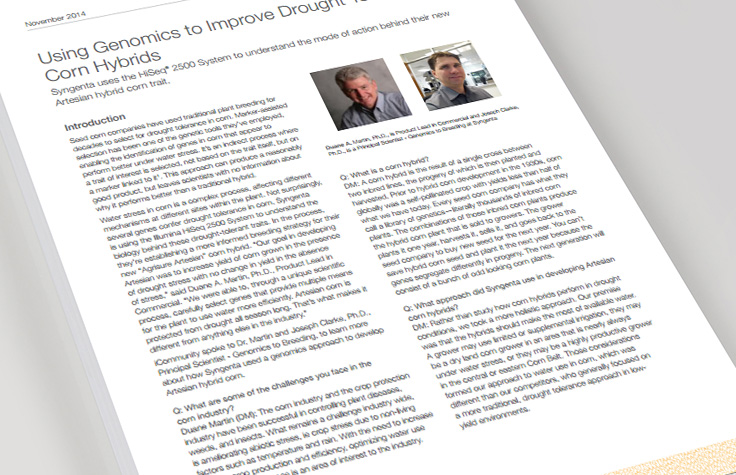
Improving Drought Tolerance in Corn
Syngenta uses Illumina sequencing to understand the mode of action behind their new hybrid corn.
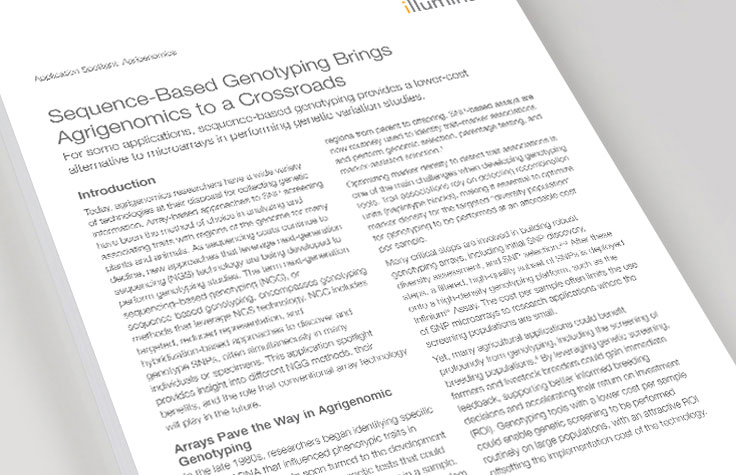
Genotyping by Sequencing
This application spotlight describes the advantages and considerations of several sequence-based genotyping research methods.
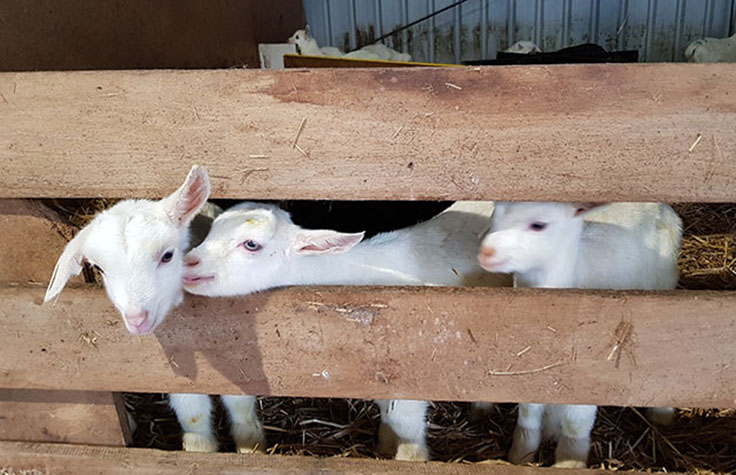
Sequencing Enables Selective Breeding of Goat Herd
Researchers in New Zealand use genotyping by sequencing to overcome cost and resource hurdles associated with genomic selection.
Tracking Foodborne Pathogens with NGS
Illumina sequencing enables this lab to perform agri-food pathogen testing and epidemiology efficiently.
Genotyping by Sequencing and Transcriptomics
The authors of this study used genotyping by sequencing to study crops with varying ploidy levels.