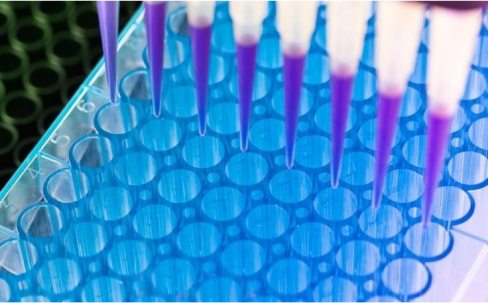
PCR-free prep expedites whole-genome sequencing
Rady Children’s Institute for Genomic Medicine uses the NovaSeq 6000 System and PCR-free library prep to develop rapid sequencing workflows for rare genetic disease research.
Unlock the possibilities
Scalable, flexible sequencing across a range of sample types, methods, and applications
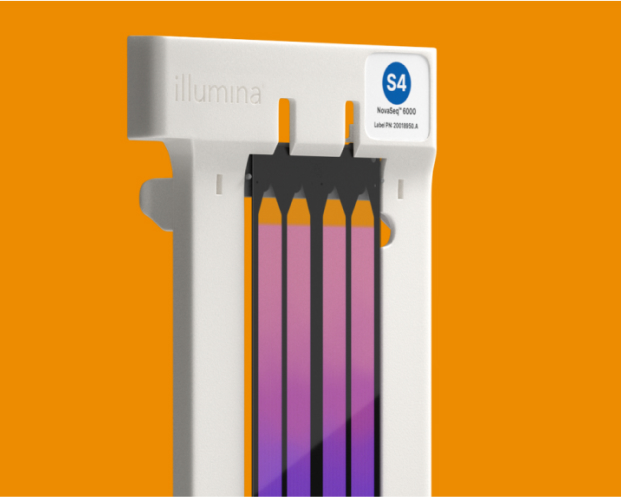
NovaSeq 6000 System performs whole-genome sequencing (WGS) efficiently and cost-effectively. Its tunable output generates up to 6 Tb and 20B reads in dual flow cell mode with streamlined workflows. Configure the system to sequence a trio in one day or up to 48 genomes in ~2 days for comprehensive coverage.
High-performing, fast, and integrated PCR-free workflow for sensitive applications such as human whole-genome sequencing or tumor–normal sequencing.
Fast, integrated workflow for a wide range of applications, including sequencing of whole human genomes, amplicons, plasmids, and microbial genomes.
NovaSeq 6000 Reagent Kits v1.5
Ready-to-use reagent kits include the reagent cartridge, flow cell, and buffer for reliable, high-throughput sequencing on the NovaSeq 6000 System. Multiple sequencing output and read length options available.
DRAGEN Germline app (on BaseSpace Sequence Hub or DRAGEN server)
Aligns and calls variants from FASTQ files, outputting BAM and VCF files.
DRAGEN Somatic Pipeline app (on BaseSpace Sequence Hub or DRAGEN server)
Aligns and calls tumor-only or tumor–normal variants from FASTQ files, outputting BAM and VCF files.
Representing less than 2% of the genome, whole-exome sequencing is a cost-effective alternative to whole-genome sequencing. The NovaSeq 6000 System offers sequencing of up to 500 exomes in a single run using a dual S4 flow cell.
Illumina DNA Prep with Enrichment
Fast, integrated DNA-based library preparation and enrichment combining on-bead tagmentation with a single hybridization protocol for targeted sequencing applications.
NovaSeq 6000 Reagent Kits v1.5
Ready-to-use reagent kits include the reagent cartridge, flow cell, and buffer for reliable, high-throughput sequencing on the NovaSeq 6000 System. Multiple sequencing output and read length options available.
Aligns and calls variants from FASTQ, BAM, or CRAM files, outputting BAM and VCF files.
Detect coding and multiple forms of noncoding RNA in normal or low-quality samples. The NovaSeq 6000 System offers sequencing of up to 400 transcriptomes in a single run using a dual S4 flow cell.
Illumina Stranded Total RNA Prep with Ribo-Zero Plus or Ribo-Zero Plus Microbiome
Rapid library preparation from a broad range of sample types for studying the coding and noncoding transcriptome with unparalleled study flexibility.
NovaSeq 6000 Reagent Kits v1.5
Ready-to-use reagent kits include the reagent cartridge, flow cell, and buffer for reliable, high-throughput sequencing on the NovaSeq 6000 System. Multiple sequencing output and read length options available.
Next-generation sequencing secondary analysis of RNA transcripts, including alignment, quantification, and fusion detection.
Resource spotlight
Learn about the streamlined workflow of the NovaSeq 6000 System. See firsthand why this system is an advanced high-throughput sequencing system.
Analyze protein interactions with DNA for genome-wide surveys of gene regulation.
Enhance epigenetic studies with high-coverage density and flexibility enabled by sequencing-based DNA methylation analysis.
Detect known and novel transcripts and measure transcript abundance for accurate, comprehensive gene expression profiling.
Aggregate and interpret large-scale genomic data for population studies in a robust, secure, and scalable platform.
Use next-generation sequencing for sensitive and specific detection of low levels of circulating tumor DNA (ctDNA) in the bloodstream.
Assess the individual contributions of single cells in complex tissues by profiling the transcriptome.
Enable fast, accurate characterization of novel genomes in cases where no reference sequence is available for alignment.
Assess genes in organisms present in a complex sample to evaluate bacterial diversity and detect unculturable microorganisms.
Combining proteomics assays with the power and scalability of NGS enables simultaneous interrogation of thousands of proteins in a single sample.
Focus time, expenses, and analysis on sequencing only a subset of genes or genome regions of research interest.
Use sequence-specific hybridization to analyze genomic regions of interest.
See what’s possible with the NovaSeq 6000 System
Rady Children’s Institute for Genomic Medicine uses the NovaSeq 6000 System and PCR-free library prep to develop rapid sequencing workflows for rare genetic disease research.
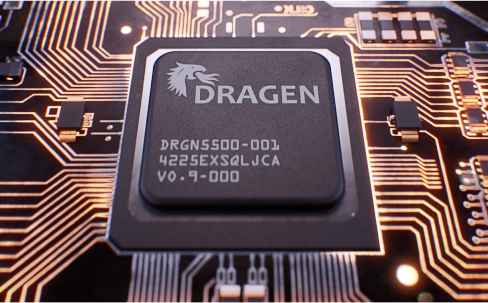
Cloud-based DRAGEN secondary analysis enables GeneDx to adopt the NovaSeq 6000 System for high-throughput whole-genome sequencing and variant identification studies.
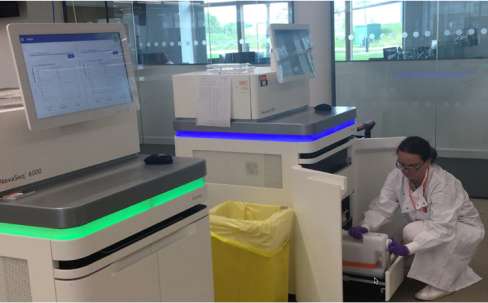
GenOMICC and Genomics England launch large sequencing study aimed at uncovering genetic factors in people susceptible to COVID-19.